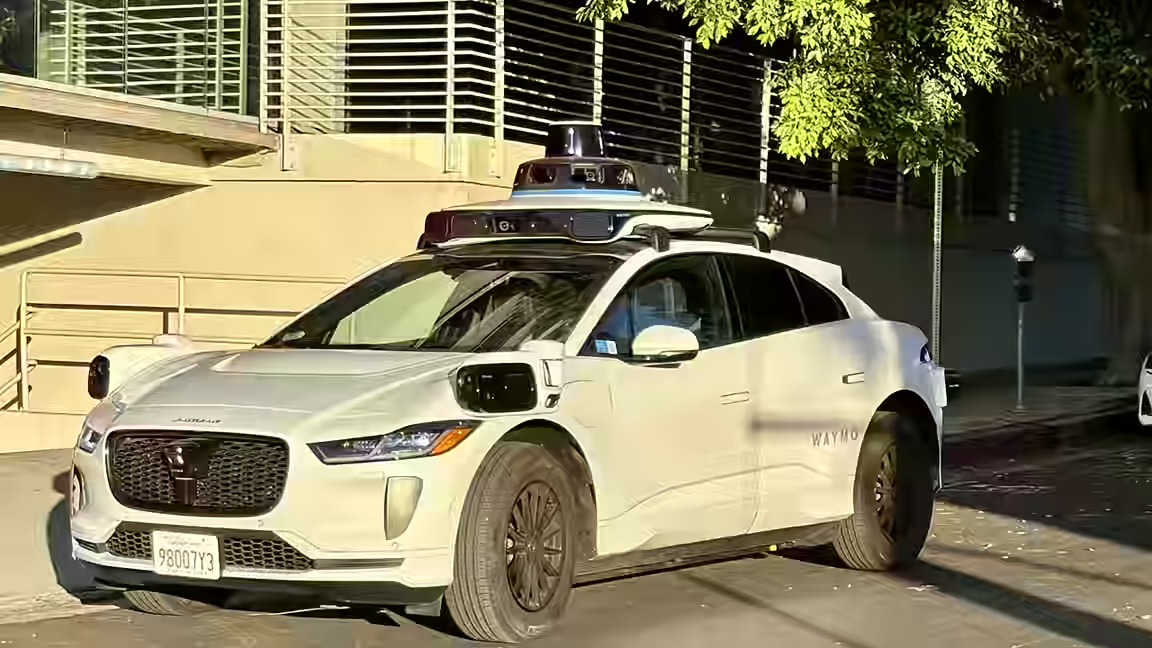
Waymo’s robotaxi fleet is no longer just a test of autonomous driving in San Francisco. It is also becoming a test of how many parking violations a fast-growing fleet can absorb before the numbers stop looking incidental. According to city records reported by Electrek, Waymo’s cars have collected more than 8,300 parking tickets and nearly $1 million in fines in San Francisco since the start of 2025.
The figures are striking because they show how quickly the problem has scaled. In 2024, Waymo received 589 tickets. In the first 18 months covered by the records cited in the report, the number jumped to 8,309 citations worth $957,008. More than 4,100 of those came in the first six and a half months of 2026 alone. That is the kind of growth curve that turns a nuisance into a recurring operating expense.
The most common violation was parking in stands, the areas reserved for buses and certain vehicles. Other citations involved prohibited zones, blocking traffic, double parking, and obstructing bike lanes. Those are all familiar city problems, but the Waymo data suggests they are now recurring enough to be tracked like a product metric. A handful of addresses accounted for an outsized number of citations, pointing to repeated pickup and drop-off decisions at the same crowded curb locations.
That curbside reality is important. San Francisco has lots of demand for quick loading and unloading, but not enough legal space for it. The report argues that this makes the problem less about autonomous cars in general and more about traffic design and public policy lagging behind the explosion in ride-hail use. Human-driven rideshares park illegally too, but autonomous vehicles are easier to measure and therefore easier to criticize when the count gets large.
Waymo says it pays the tickets like any other driver and works with the city’s SFMTA Fleet Program. The company also says its driver continues to learn from every mile traveled. That is a familiar autonomy industry line, but the data suggests the learning loop is not yet fast enough to stop the same mistakes from repeating at high-volume stops. One safety researcher quoted in the story put it bluntly: the amount of money for a ticket is nothing to Waymo.
That is the central tension here. The fines are real, but they are not financially material to a company backed by Alphabet and valued in the tens of billions. They are, however, a visible signal that the service still struggles with the ordinary friction of city life: limited curb space, dense traffic, and passengers who want to be dropped exactly where they are headed.
The story is not about crashes or core safety failures. It is about operational discipline, and about the small, repeated behaviors that determine whether a robotaxi service feels polished or merely tolerated. Waymo’s expanding footprint across the Bay Area, along with its service to SFO and its wider California approvals, gives it more chances to stop in the wrong place. The result is a parking bill large enough to be a data point all by itself.