# Tottenham says VMware replacement cut licensing fees by more than 85 percent
Event date: 2026-09-07
Tottenham Hotspur says it has cut licensing fees by more than 85 percent after replacing VMware in its stadium infrastructure with Hewlett Packard Enterprise’s Morpheus VM Essentials software, another sign that Broadcom’s overhaul of VMware is still pushing enterprise customers to look elsewhere.
According to reporting cited by Ars Technica, the club has moved its stadium’s server, storage and networking stack to HPE solutions delivered through GreenLake. The environment is underpinned by HPE Morpheus VM Essentials and OpsRamp, with HPE managing the hybrid-cloud service. Tottenham has not said which VMware products it previously used or what it had been paying, so the reported savings are directional rather than fully audited in public.
Still, the scale of the reduction is notable. Rob Pickering, Tottenham’s CTO, said the club moved away from VMware over the last three months and that the Broadcom takeover’s commercial changes were well known. He told reporters that the “north of 85 percent” figure refers to licensing fees, not the total cost of running the stadium’s infrastructure. That distinction matters because it frames the move as both a cost-saving and architectural shift, not just a budget line item.
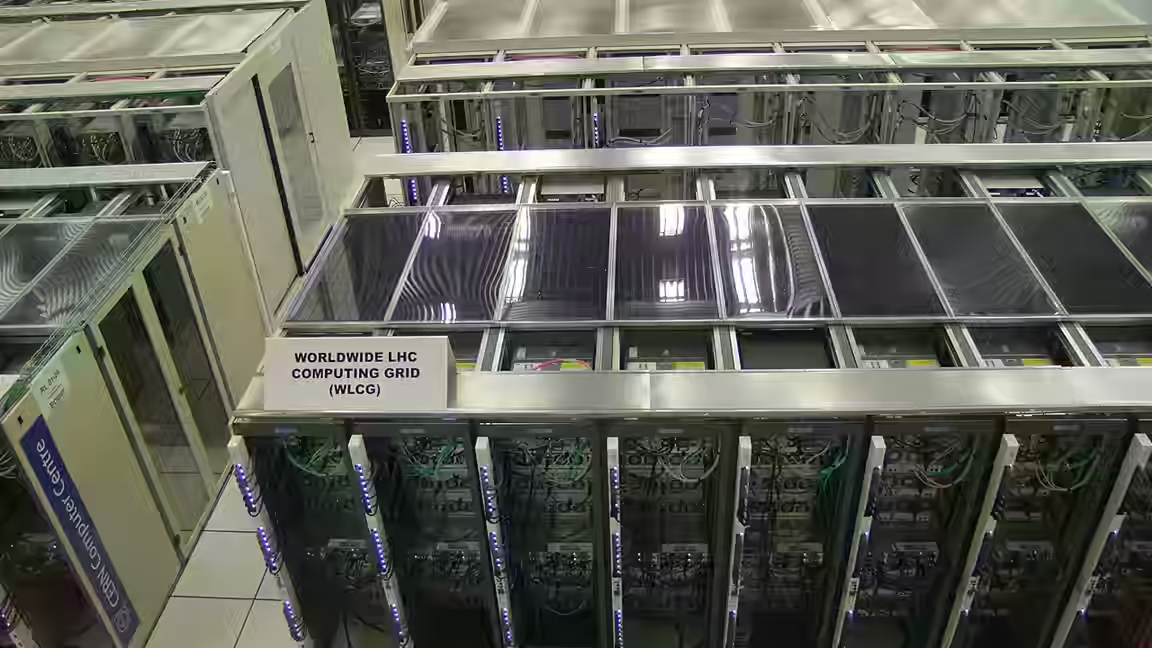
The club’s infrastructure is substantial for a sports organization. The report says the stadium has a six-aisle data center and uses HPE ProLiant Compute Gen12 hardware and Alletra Storage MP. That suggests Tottenham is not simply trimming software expense but reworking the physical underlay of its operations around HPE’s stack.
Pickering’s comments also show how sports technology leaders now talk about AI operations. He said virtualization only matters if it is tied into a broader AI ops platform, because the real value comes from helping a small team spot faults and remediate them without human intervention. Tottenham had about 35 people in its technology team in 2025, which makes automation more than a nice-to-have; it is a capacity multiplier.
That is also why the club frames the move as more than a vendor swap. Pickering said the point is to connect the infrastructure into a system that gives the team “one pane of glass” across operations. In other words, the selling point is not only lower licensing costs but simpler oversight of a complex, multi-site environment.
The timing is important. Broadcom’s acquisition of VMware has already triggered a wave of customer complaints about pricing and licensing changes, and Tottenham now joins the list of organizations publicly describing a migration away from the platform. The club’s case will be watched closely because it combines a high-profile brand, a large physical venue and a clear before-and-after cost claim.
HPE, for its part, is using the Tottenham example to argue that its Morpheus and OpsRamp tools can modernize virtualization while reducing overhead. The club’s transition is almost complete, which means the migration is not just a pilot or proof of concept. It is an operational change with real-world consequences for how one of the Premier League’s most prominent venues runs its digital backbone.
The broader signal is simple: when software licensing becomes expensive enough, even a stadium becomes an IT migration story.