A retro-computing project has restored internet audio and video calling in Apple's discontinued iChat software by recreating a network service that the application once relied on. The replacement is intended for Macs running OS X Leopard or Snow Leopard and has been demonstrated with old Apple hardware over a real internet connection.
The effort began after systems engineer Chris Jones and a friend tried to place an iChat audio call in 2023. They could sign in through a third-party XMPP, or Jabber, server and make the recipient's client ring, but the call failed during connection setup. Network captures and iChat's little-documented debugging mode eventually showed that a separate Apple service was part of the process.
That service used a protocol called SNATMAP to help the clients negotiate connectivity through network address translation. The original Apple endpoint no longer responded, leaving the pair without the information needed to complete a call. Hosting the still-available configuration file on another web server was not sufficient because iChat also expected a functioning SNATMAP server.
Jones returned to the project in 2026. Using captures from the earlier tests and software-analysis assistance from a large language model, the pair reconstructed the request and response format expected by iChat and produced a protocol specification. Jones then wrote a small UDP server in Python from that specification. The source and protocol notes were published so others can run their own instance.
Testing required more than two vintage Macs. Jones built a miniature laboratory internet with two virtual OpenWrt routers, separate private networks, an XMPP server, a web server and the new SNATMAP service. That setup made it possible to reproduce connections across two layers of network address translation and iterate without requiring two commercial internet connections.
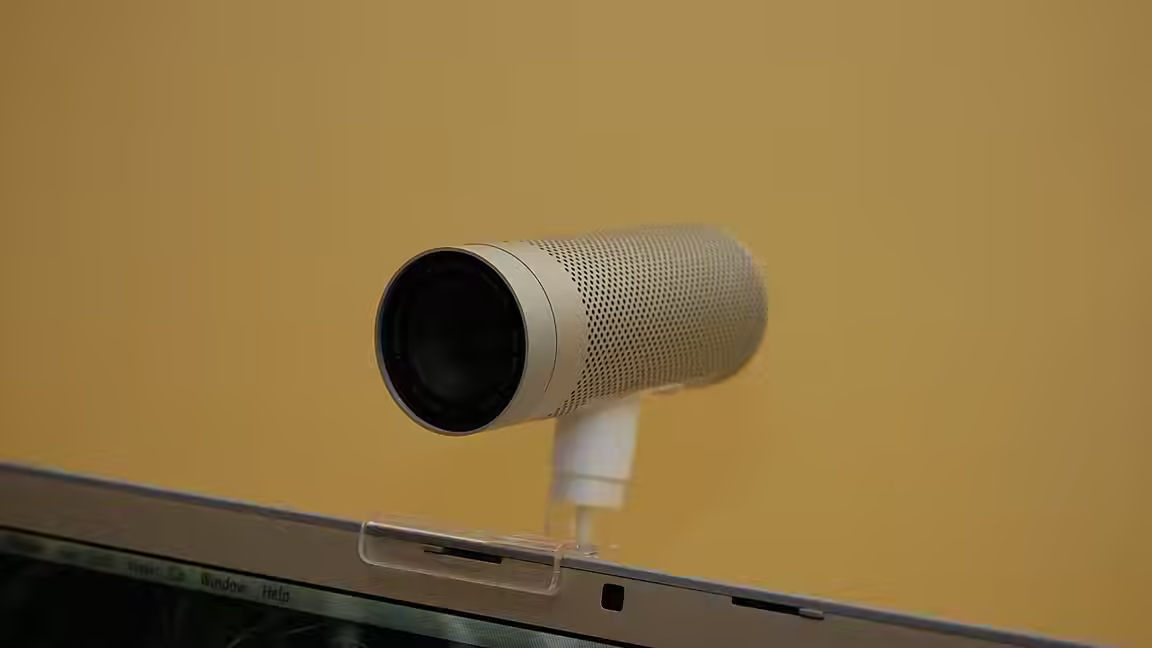
The resulting system was subsequently used for an iChat AV session across the public internet. Jones reports testing on Leopard and says Snow Leopard should work, while Tiger and Panther remain untested. He also demonstrated that iChat could use a much newer Logitech C920 webcam rather than requiring Apple's period iSight camera.
Users must redirect iChat's request for Apple's configuration host to the replacement service through the Mac's hosts file. Their routers must preserve source ports; some BSD-based routers, including pfSense or OPNsense configurations, may need an outbound NAT adjustment.
The project is narrow and aimed at the small community still operating mid-2000s Macs, but it illustrates how protocol documentation and a compact compatibility service can restore a network-dependent feature after its original infrastructure disappears.