Francesco Schettino, the former captain of the Costa Concordia cruise ship, left Rome's Rebibbia prison on Friday after an Italian court granted his release on probation. He had spent more than nine years in custody for his role in the 2012 disaster off the island of Giglio, in which 32 passengers and crew members died.
The Rome Supervisory Court approved the alternative measure after reviewing Schettino's rehabilitation and his conduct in prison, according to reporting cited by Euronews. His lawyer, Francesca Carnicelli, said prison staff had assessed his participation in rehabilitation programs very positively and argued that probation was the proper continuation of the sentence.
Release on probation does not erase the conviction or the underlying sentence. It changes the conditions under which the remaining portion is served, subject to judicial requirements. The available report did not detail every condition attached to Schettino's release, so it should not be interpreted as an unconditional end to the case.
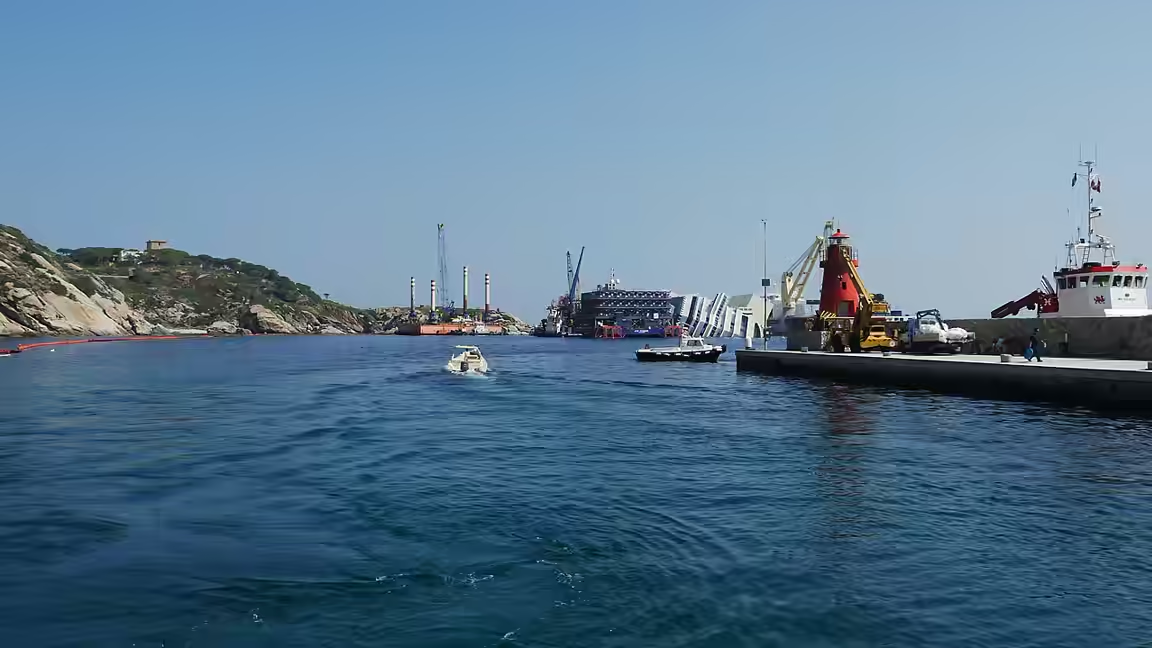
The Costa Concordia struck rocks off Isola del Giglio in the Tyrrhenian Sea in January 2012. The impact tore a large opening in the ship's port side, causing the vessel to list and eventually come to rest partially submerged near Punta Gabbianara. The sinking and chaotic evacuation became one of the world's most closely watched modern maritime disasters.
Italian courts sentenced Schettino to 16 years in prison. The Florence Court of Appeals upheld the sentence in May 2016, along with a five-year ban from maritime work. Italy's Court of Cassation confirmed the conviction in May 2017, making it final. Survivors who joined the criminal proceedings as civil claimants were also awarded provisional compensation, with amounts later increased to between €40,000 and €65,000 each.
Schettino's release follows the ordinary judicial assessment of whether a prisoner qualifies for an alternative measure after serving a substantial part of a sentence. His lawyer's statement emphasized rehabilitation and institutional evaluations rather than a challenge to the established facts of the wreck or the conviction.
The decision is likely to renew attention on a disaster that reshaped cruise-industry discussions about navigation, emergency command and evacuation. For survivors and victims' families, the court's ruling concerns the administration of Schettino's sentence; it does not alter the death toll, the findings of responsibility or the final judgment entered by Italy's highest court.
After more than nine years behind bars, Schettino will now complete the next phase under probation supervision. Any additional restrictions, reporting duties or duration will depend on the terms set by the supervisory court and the remaining sentence calculation.