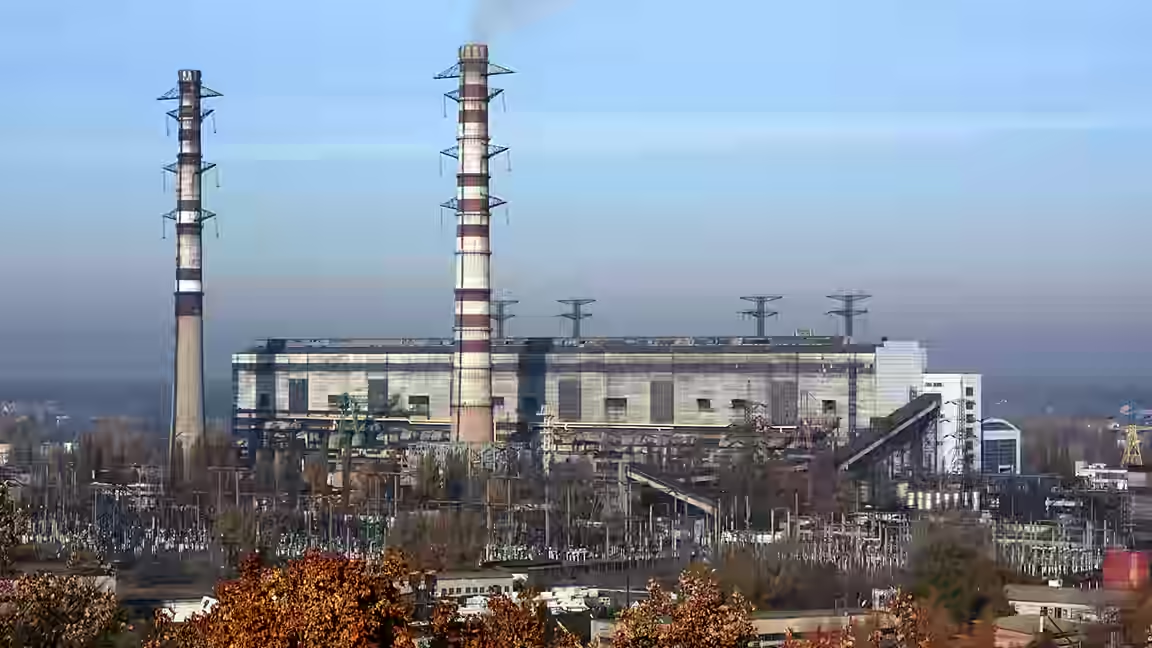
Russian ballistic missile strikes hit a major Kyiv energy facility and a residential building late on October 13, Ukrainian officials said, killing two people and injuring 21. The attack affected electricity supplies in parts of the capital and intensified a dispute over an energy ceasefire that the United States said Russia and Ukraine had accepted days earlier.
President Volodymyr Zelensky identified the damaged facility as Darnytska CHP-4, a combined heat and power plant serving the Dniprovskyi district and parts of Darnytskyi. Kyiv Mayor Vitali Klitschko said several energy sites were struck but did not provide details on each location. Officials urged residents to remain in shelters while a missile alert was active.
Zelensky said the ballistic missiles arrived without early warning from Ukraine’s partners. His statement came amid speculation that Washington had restricted access to intelligence used to detect incoming threats. US President Donald Trump denied that assertion on October 13, saying the United States continued to help Ukraine and share intelligence. The supplied report did not independently determine why no warning was received for these launches.
The plant has been hit repeatedly during the war. A separate Russian missile attack in February severely damaged it and forced a shutdown. That earlier strike left more than 1,000 apartment buildings without heating and hot water, as well as 47 schools, 72 kindergartens and 18 medical facilities. Those figures refer to the February attack, not automatically to the latest damage.
The October strike was the second consecutive night in which Russian missiles hit Kyiv. It followed Trump’s announcement that the two countries had agreed to stop attacks on energy sites. Zelensky said Ukraine supported such a pause and accused Russia of violating it by targeting another power station. Trump did not directly say whether Russia had broken the arrangement, noting that Ukraine had struck sites the previous day and saying both countries wanted the war to end.
Russian Foreign Minister Sergey Lavrov had argued that a ceasefire would give Europe an opportunity to rearm Ukraine and said Kyiv did not deserve that respite. The divergent statements showed that the scope and durability of the reported agreement remained unclear even before the latest missiles landed.
Zelensky was preparing to meet UK Prime Minister Andy Burnham in London to discuss speeding up air-defence deliveries. The damage to a plant that provides both heat and electricity underlined the civilian stakes as colder weather approaches. The casualty count and descriptions of the targets come from Ukrainian authorities; the report did not include a Russian account of the individual strikes.