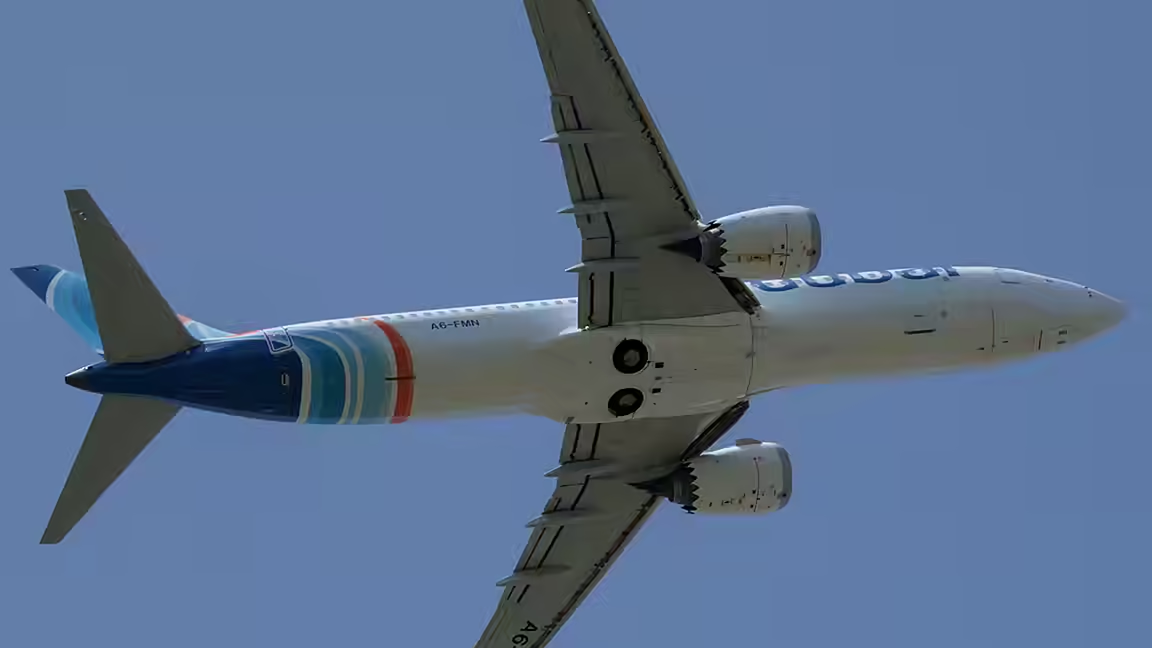
A Flydubai flight from Dubai to Tel Aviv made an emergency landing in Saudi Arabia on September 30 after the co-pilot allegedly stabbed the captain and the aircraft entered a rapid descent. Passengers and crew restrained the attacker, while two off-duty pilots who had been seated in the cabin took control and landed at Tabuk.
The Boeing 737 Max descended about 17,000 feet, or 5,200 metres, in less than two minutes before stabilizing, according to BBC reporting. Passengers described screams and severe forces in the cabin as the aircraft dropped. Several people then entered the cockpit and subdued the assailant. Three or four passengers involved suffered minor injuries, one traveller said.
Captain Smit Machchhar, an Indian national, was injured in the attack. Israeli Prime Minister Benjamin Netanyahu publicly praised him for resisting the co-pilot and helping prevent a larger disaster. The alleged attacker was arrested and questioned by Saudi authorities. Officials had not established a motive by the time of the initial reports, and Netanyahu said investigators from the United Arab Emirates and likely Israel would take part after the Saudi inquiry.
Flydubai identified the service as flight FZ 1073 and temporarily suspended all flights between the UAE and Israel. The airline said the pause would allow authorities to determine what happened and that it was coordinating with regulators, government agencies and airports. Before the incident, it operated ten daily services on the route.
A photograph verified by the BBC showed the aircraft on the ground at Tabuk with apparent damage to part of its tail rudder. Aviation specialists cautioned that the cause was not yet known. One possible explanation was unusual stress from forceful control inputs during the struggle or recovery from the descent, but that remained an expert assessment rather than an investigative finding.
The incident also raised questions about how passengers gained access to a normally reinforced and locked cockpit. Witness accounts indicated that a crew member and passengers entered during the emergency, but the precise sequence was unclear. Aviation experts noted that cockpit doors use electronic locking systems operated from the flight deck, with details varying by aircraft.
Passengers later continued to Israel, where they were met at Ben Gurion Airport. Saudi medical personnel treated people injured in the incident despite Saudi Arabia and Israel having no formal diplomatic relations. An Israeli minister thanked Saudi officials for receiving and assisting the passengers.
The investigation now has to establish the attacker's motive, how the cockpit access unfolded and what caused the aircraft's tail damage. Until those findings are available, descriptions of the event as terrorism remain political characterizations rather than a confirmed investigative conclusion.