The first parliamentary election in the Bangsamoro Autonomous Region in Muslim Mindanao has ended without a single party winning a majority, leaving the southern Philippine region headed for coalition talks. With more than 99 percent of ballots counted by Tuesday evening, two rival parties rooted in the Moro Islamic Liberation Front each held more than 30 percent of the vote, according to a partial count reported by GMA News and cited by Al Jazeera.
Neither side reached the 41 seats required for a majority in the 80-member parliament. That result places negotiations at the center of the next stage of government formation in a region created through a long peace process intended to end decades of separatist conflict.
The Moro Islamic Liberation Front signed a peace agreement with the Philippine government in 2014. Voters approved the autonomous region in 2019, after which the front led an interim administration. Political divisions deepened when President Ferdinand Marcos Jr replaced longtime front chairman Al Haj Murad Ebrahim with former commander Abdulraof Macacua as chief minister last year.
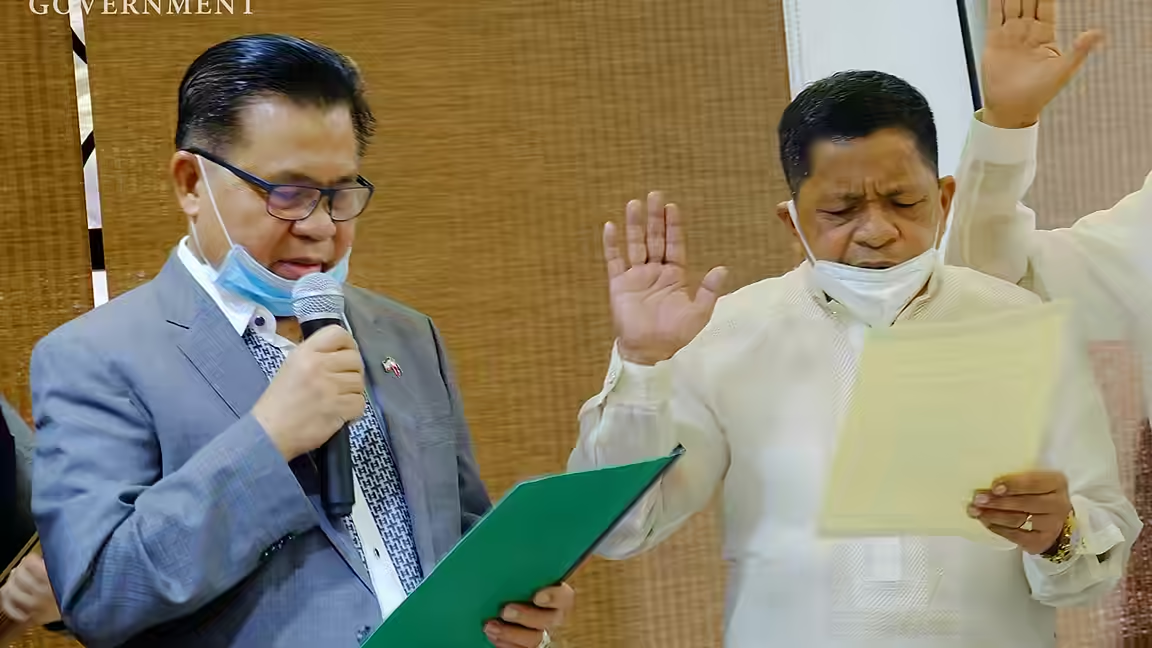
Ebrahim, whose United Bangsamoro Justice Party contested the vote, said after casting his ballot that he hoped the party would secure the largest share of seats. He also indicated that it would seek allies if it fell short of a majority. The inconclusive result makes that coalition option necessary rather than hypothetical.
The vote was generally peaceful, authorities said, although shootings on election day killed at least three people and wounded others. Brigadier General Jemuel Siason, the regional deputy police director, said security deployments would remain in place after winners were proclaimed in an effort to keep conditions stable.
The election carries significance beyond control of the legislature. The autonomous government is a central product of the peace settlement, converting an armed movement into an electoral participant. Some residents had feared renewed fighting if the result did not give the former rebel movement a decisive mandate, particularly while the disarmament of former fighters remains incomplete.
For communities that endured conflict and displacement, the new parliament will be judged on more than coalition arithmetic. Residents interviewed in Marawi described how peace enabled them to rebuild homes and businesses, while some families displaced during the 2017 siege of the city still await compensation and remain in temporary housing.
The election establishes competitive parliamentary politics in the Muslim-majority region, but it does not deliver a clear governing bloc. Parties must now assemble a workable majority while preserving confidence in a peace process whose gains residents described as real but fragile.