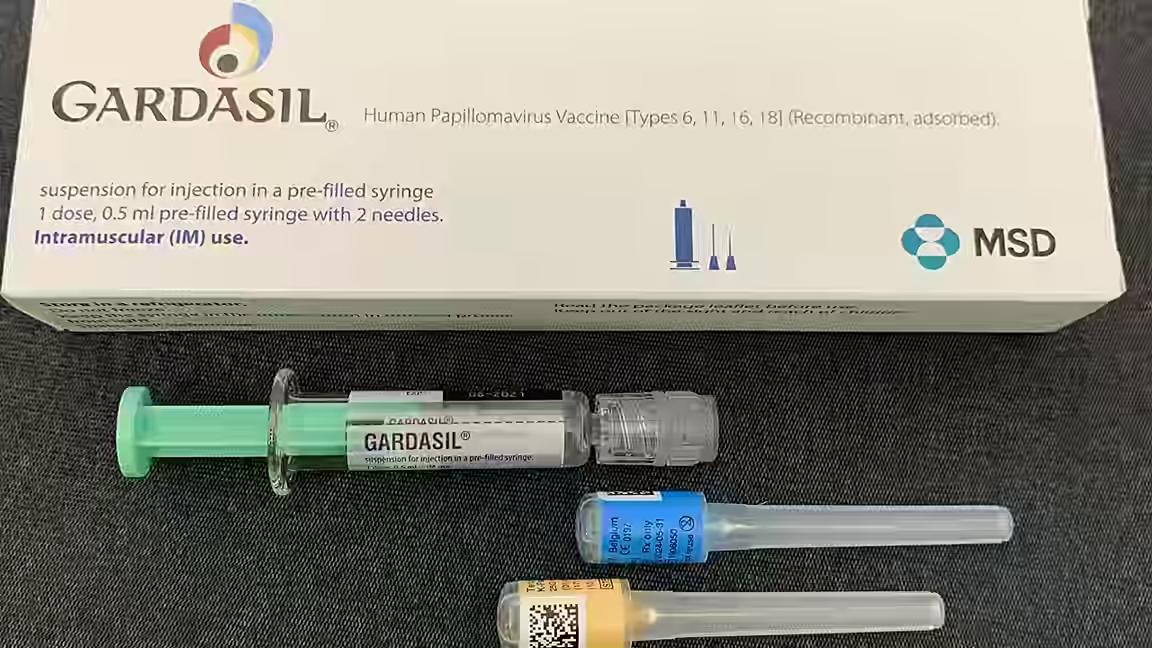
A new global analysis estimates that infections caused about 2.3 million cancer cases in 2024, equivalent to roughly 12 percent of all new diagnoses that year. The research, published in The Lancet Oncology, assessed 12 viruses, bacteria and parasites already associated with cancer and combined cancer-registry estimates with data on how commonly those infections occur among people with specific tumours.
The burden was highly concentrated. Four pathogens accounted for about 92 percent of infection-attributable cases, according to the analysis. Helicobacter pylori, a bacterium that can persist in the stomach, was associated with approximately 760,000 cases, mainly gastric cancers. Human papillomavirus, or HPV, contributed an estimated 750,000 cases across cervical, penile, throat and mouth cancers. Hepatitis B was linked to 360,000 cases, while Epstein-Barr virus was associated with 260,000.
Those figures matter because several of the infections can be prevented or treated. Vaccines are available for HPV and hepatitis B, while H. pylori can be detected and treated with antibiotics. The study therefore frames infection control as part of cancer prevention, alongside established measures addressing tobacco, alcohol, diet, physical activity and environmental risks.
Access remains uneven. The report says low- and middle-income countries carried 77 percent of the infection-related cancer burden, including about 81 percent of cancers linked to HPV. Yet only 31 percent of eligible adolescent girls worldwide received at least one HPV-vaccine dose in 2024, far below the World Health Organization’s 90 percent target. Researchers and clinicians cited in the report pointed to single-dose HPV programmes as one way to reduce cost and follow-up barriers.
The prevention landscape differs by pathogen. Hepatitis B vaccination can reduce the infections that later lead to liver cancer. For H. pylori, researchers are studying broader population testing and treatment as well as vaccines. There is no approved Epstein-Barr vaccine, and developing one is difficult because the virus uses several proteins to enter cells and persists for life. Most people infected with Epstein-Barr virus never develop cancer, despite infection being extremely common.
The estimates also carry important limits. The underlying cancer registries cover only part of the world’s population, with especially sparse coverage in Africa, so the researchers say better data are needed. The analysis describes population-level attribution, not a way to determine the cause of an individual patient’s cancer. Even with those qualifications, it identifies a large preventable share of the global cancer burden and shows why vaccination, infection treatment and stronger surveillance can be considered cancer-control tools.